Pregnancy is often a time of joy, excitement, and hope. But along with happiness, it also brings certain worries — “Is everything going to be fine?”
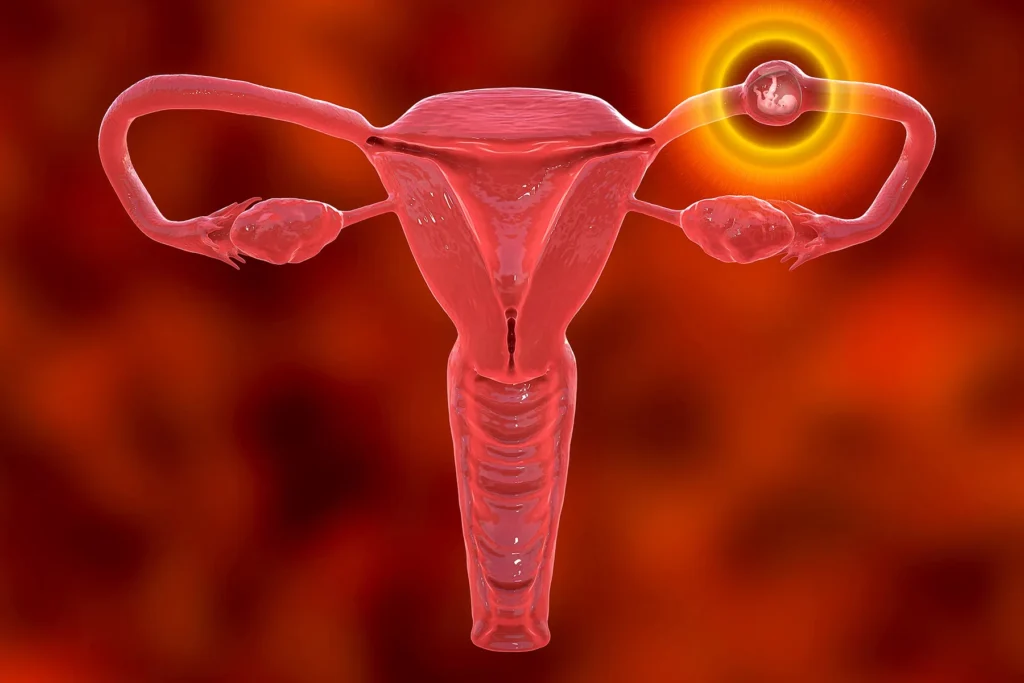
One such condition that expectant mothers should be aware of is ectopic pregnancy. This happens when the fertilized egg implants outside the uterus, most commonly in the fallopian tube. Since a baby cannot grow in this location, it is a potentially life-threatening condition if not detected on time.
In this blog, let’s explore what ectopic pregnancy is, its symptoms, causes, and treatment options.
What is an Ectopic Pregnancy?
In a normal pregnancy, the fertilized egg implants itself in the uterus, where it can grow and develop safely.
In an ectopic pregnancy, however, the egg implants outside the uterus — most often in the fallopian tube (also called a tubal pregnancy). Because the fallopian tube cannot support the growing embryo, this condition becomes dangerous and requires immediate medical care.
Symptoms to Watch Out For:
Early signs of ectopic pregnancy can look very similar to normal pregnancy — such as missed periods, nausea, and breast tenderness.
But there are certain red flag symptoms that should never be ignored:
- Sharp pain in the lower abdomen, especially on one side
- Unusual vaginal bleeding (light or heavy)
- Pain in the shoulder tip (can be a sign of internal bleeding)
- Dizziness, weakness, or fainting (possible rupture and emergency situation)
If you or someone you know experiences these symptoms during pregnancy, it is a medical emergency. Immediate medical attention is crucial.
Causes & Risk Factors
Ectopic pregnancy can happen to anyone, but some women are at a higher risk:
- Previous ectopic pregnancy
- Pelvic infections (such as chlamydia)
- IVF or other fertility treatments
- Smoking
- Prior fallopian tube surgery or damage
That’s why early ultrasounds and regular checkups are extremely important during pregnancy.
Treatment Options
Treatment depends on how early the condition is detected:
- Medication (Methotrexate): If diagnosed early, ectopic pregnancy can sometimes be treated with an injection of methotrexate, which helps dissolve the pregnancy tissue without surgery.
- Surgery: If the fallopian tube has ruptured or there is internal bleeding, surgery is necessary. In some cases, removal of the affected fallopian tube (salpingectomy) may be required to save the woman’s life.
The key is timely diagnosis, as it can be life-saving.
Final Thoughts
Ectopic pregnancy can be an emotionally painful experience. However, it does not mean that future pregnancies are impossible. With proper treatment and medical care, many women go on to have healthy, successful pregnancies later.
If you or someone close to you is dealing with this condition, remember — they don’t need judgment, they need support and understanding.
For more in-depth discussions on women’s health and pregnancy, you can watch Dr. Mudita Jain Talesra’s detailed explanation in her YouTube video here